When it comes to jewellery, diamonds are often at the forefront of the conversation. Timeless, with associations of wealth and strategic marketing, they have dominated the market for hundreds of years, having their unmatched qualities making them ideal gemstones for all forms of adornment. However, this is not to say they have not altered and evolved.
Diamonds grow deep within the Earth’s mantle, where the temperature and pressure exceed that of the growth conditions of most other gemstones. They are formed solely of carbon and are the only gemstone to have a single chemical composition. However, as with everything related to nature, it is ever changing and it is these changes that allow for other chemicals to come into contact with the diamond as it forms, whether as impurities or by replacing carbon atoms within its chemical composition. This is what creates coloured diamonds, nitrogen being the most common, it creates yellow and brown hues. Boron is responsible for blue diamonds, with only very small amounts being needed. Although not all diamonds require additional chemicals to appear coloured, pink diamonds are the result of changes to their crystal structure, which affects how light interacts with the atoms within the diamond. Additionally, green diamonds have been exposed to radiation during their growth. Red, purple and even colour changing diamonds do exist, however they are extremely rare and are still being researched.
In more recent years, when discussing diamonds, the term lab diamonds often comes up in the conversation. Having a good understanding of diamonds has allowed humans to replicate the processes required for diamonds to grow. Meaning diamonds can be grown within laboratories for a fraction of the cost and time compared to natural diamonds. While there are obvious benefits to being able to create diamonds at will to chosen specifications, further ethical arguments are raised. For example, people often argue lab grown diamonds are more environmentally friendly due to there being no need to mine them, and as such people are not needed to complete the mining, preventing human rights violations and economic reliance.
A large part of the popularity of diamonds is the marketing surrounding them. More recently the term ‘salt and pepper diamonds’ has been thrown around; this is an inventive way of rebranding what is considered a low-quality diamond. The salt and pepper aspect being large visible inclusions throughout the stone, this has been pitched as a new and different stone when in reality they are stones that previously would not have been considered gem quality according to the four C’s, namely colour, cut, clarity and carat.
Another example is the company De Beers, who notoriously monopolised the diamond market for years and created the slogan ‘A Diamond is forever’ with the idea that engagement rings should be set with diamonds alone and in giving such a ring showed the persons love and commitment to their partner. Therefore, consolidating the idea that diamonds should be kept as heirlooms and maintained their association with wealth and status. As a species we are enthralled with symbolism and memory, which allowed such
marketing to take hold and maintain through generations, to this day people often dream of having a bright sparkling diamond solitaire presented to them in one romantic setting or another, after which their loved ones crowd around to catch sight of the ring, even better if the four C’s can be quoted on the spot. However, just as we enjoy these displays of life, we are still heavily tied to death, mourning jewellery has also maintained its place for generations and as such it opened an ideal market in lab grown diamonds. Some companies have managed to create a niche where the adoration of diamonds and their associations meet the needs of people to keep their loved ones close even in death. Where one can be turned into a diamond. Hair samples are sent to laboratories where the carbon is extracted from them and then said carbon is used to create diamonds. Not only that, but diamonds to certain specifications, such as size and colour. One website’s example being a blue diamond created due to the persons love of the sea.
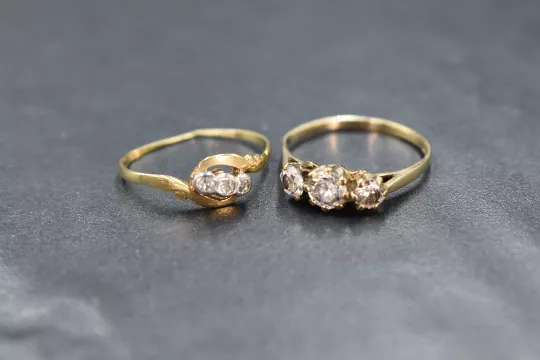
Diamonds regardless of whether they are natural or lab grown, will forever hold a place at the forefront of jewellery. Whether as an Edwardian old cut diamond ring, passed from bride to bride or as a pink heart memorial lab grown diamond necklace.