
Press release:
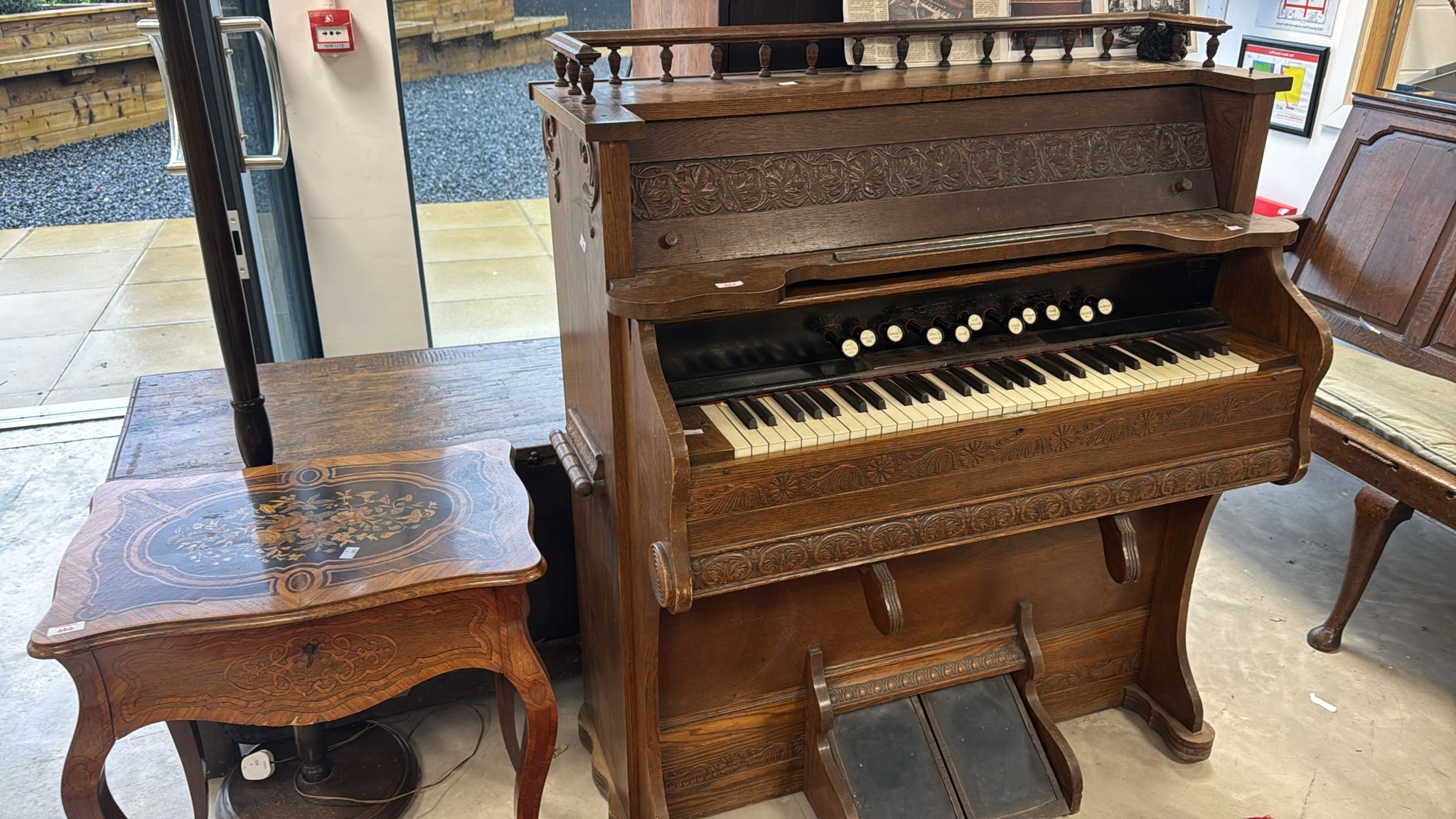
A harmonium from Holy Trinity Church in the lost village of Mardale goes under the hammer this week, offering collectors and local history enthusiasts a chance to own a remarkable piece of Cumbrian heritage. The sale, hosted by 1818 Auctioneers, will help raise funds for the Cumbria Deaf Association (CDA).
The reed organ once stood in Holy Trinity Church, part of the Cumbrian villages of Mardale Green and Measand, which were deliberately flooded in the 1930s to create Haweswater Reservoir. The reservoir, one of England’s largest, was constructed to supply drinking water to Manchester and required the removal of hundreds of residents. The small church held its final service in August 1935 and was dismantled as waters rose between 1936 and 1937.
For decades, the harmonium was thought lost. But in 2008, it came to the attention of The Shap History Society when the Cumbria Deaf Association, which owned the Carlisle building that housed the harmonium, sold it. The building’s previous owners were the Diocese of Carlisle.
Greer Shepherd from the Cumbria Deaf Association says the deep historical link between the deaf community in Cumbria and the church may explain why the organ came into their possession. She said: “Before formal social care existed, church workers often supported Deaf people with welfare, communication and pastoral needs. When the charity bought an office in Carlisle, this link could explain why it happened to be a church property. It’s very unlikely the harmonium was ever played for the benefit of Deaf people at the time, but it has been part of our organisation’s story for generations. Now, auctioning it will help support our ongoing work across the county.”
The CDA provides advocacy and interpreter support for Deaf people throughout Cumbria, working to enable the Deaf community to access essential services.
Bill Nelson of 1818 Auctioneers said, “This harmonium is not just an antique instrument, but it is also a surviving relic from a community that was effectively erased from the map. The item’s true value lies in its historical and social context, rather than monetary, which is why we expect it to make £200-300,” added Bill.
The harmonium, which moved to the charity’s Kendal office, is being sold with a short history and historic press cuttings. It will appear, alongside other items stored with it, and believed to be from the same church, in 1818 Auctioneers’ Antique Vintage and Later Furniture and Furnishings sale. Online bidding is open until Sunday 7 December 2025.
Members of the public can view the organ in person at the saleroom at Junction 36 Auction Centre near Milnthorpe from 10am to 4pm on Weds 3, Thurs 4 and Fri 5 December.